

Mustard seed


₨ 1,850
Here’s a technical profile of Mustard (Brassica spp.) — focusing on its botanical, agronomic, and quality characters:
—
🌾 Technical Characters of Mustard
1. Botanical Characters
Family: Brassicaceae (Cruciferae)
Species commonly grown:
Brassica juncea (Indian/brown mustard)
Brassica nigra (black mustard)
Brassica alba (yellow/white mustard)
Life cycle: Annual (90–120 days)
Growth habit: Erect, branching herb
Root system: Taproot with secondary roots
Stem: Round, erect, sometimes with waxy coating
Leaves: Simple, lobed, alternate, rough surface, green to bluish-green
Flowers: Yellow, typical cruciferous (four petals, cross-shaped), self- and cross-pollinated (insects, especially bees)
Fruit (Silique): Long capsule (2–8 cm) with 10–20 seeds
Seeds: Small, round, yellow, brown, or black depending on species
—
2. Agronomic Characters
Season: Rabi crop in South Asia; cool-season in temperate zones
Optimum temperature: 15–25 °C (germination 5–10 °C)
Rainfall requirement: 350–500 mm (well-distributed)
Soil requirement: Well-drained loamy soil, pH 6–7.5
Plant height: 80–160 cm (variety-dependent)
Duration:
Early: 85–100 days
Medium: 110–120 days
Seed rate:
OP varieties: 4–5 kg/acre (10–12 kg/ha)
Hybrids: 2–3 kg/acre (5–7 kg/ha)
Spacing: 30 cm row × 10–15 cm plant
—
3. Yield Characters
Yield potential:
Local varieties: 1.2–2.0 t/ha
Hybrids: 2.5–3.5 t/ha
Oil content: 35–42%
Protein in seed meal: 35–40%
—
4. Quality Characters
Mustard oil composition:
Erucic acid: 30–50% (in traditional varieties; low in improved types)
Oleic acid: 15–20%
Linoleic acid: 15–20%
Linolenic acid: 8–12%
Glucosinolates: Present; cause pungency but limit meal use in livestock feed
Special compounds: Allyl isothiocyanate → sharp pungency in mustard oil & seeds
—
5. Stress & Disease Resistance
Tolerance: Moderately tolerant to drought & marginal soils
Major pests: Mustard aphid (Lipaphis erysimi), painted bug, sawfly
Major diseases: Alternaria blight, white rust, downy mildew, sclerotinia
Improved hybrids: Show better tolerance to drought, heat, and aphids
—
6. Economic & Industrial Characters
Uses:
Oil (cooking, pickles, frying, massage oil, industrial uses)
Seed meal (animal feed, organic fertilizer)
Greens (mustard leaves, “sarson ka saag”)
Byproducts: Biodiesel, lubricants, mustard powder (spices, condiments)
—
✅ In short: Mustard is a cool-season oilseed crop with high oil content (35–42%), protein-rich meal (35–40%), and adaptability to marginal soils, but requires careful management of aphids and fungal disease
🌾 Technical Characters of Mustard
1. Botanical Characters
- Family: Brassicaceae (Cruciferae)
- Species commonly grown:
- Brassica juncea (Indian/brown mustard)
- Brassica nigra (black mustard)
- Brassica alba (yellow/white mustard)
- Life cycle: Annual (90–120 days)
- Growth habit: Erect, branching herb
- Root system: Taproot with secondary roots
- Stem: Round, erect, sometimes with waxy coating
- Leaves: Simple, lobed, alternate, rough surface, green to bluish-green
- Flowers: Yellow, typical cruciferous (four petals, cross-shaped), self- and cross-pollinated (insects, especially bees)
- Fruit (Silique): Long capsule (2–8 cm) with 10–20 seeds
- Seeds: Small, round, yellow, brown, or black depending on species
2. Agronomic Characters
- Season: Rabi crop in South Asia; cool-season in temperate zones
- Optimum temperature: 15–25 °C (germination 5–10 °C)
- Rainfall requirement: 350–500 mm (well-distributed)
- Soil requirement: Well-drained loamy soil, pH 6–7.5
- Plant height: 80–160 cm (variety-dependent)
- Duration:
- Early: 85–100 days
- Medium: 110–120 days
- Seed rate:
- OP varieties: 4–5 kg/acre (10–12 kg/ha)
- Hybrids: 2–3 kg/acre (5–7 kg/ha)
- Spacing: 30 cm row × 10–15 cm plant
3. Yield Characters
- Yield potential:
- Local varieties: 1.2–2.0 t/ha
- Hybrids: 2.5–3.5 t/ha
- Oil content: 35–42%
- Protein in seed meal: 35–40%
4. Quality Characters
- Mustard oil composition:
- Erucic acid: 30–50% (in traditional varieties; low in improved types)
- Oleic acid: 15–20%
- Linoleic acid: 15–20%
- Linolenic acid: 8–12%
- Glucosinolates: Present; cause pungency but limit meal use in livestock feed
- Special compounds: Allyl isothiocyanate → sharp pungency in mustard oil & seeds
5. Stress & Disease Resistance
- Tolerance: Moderately tolerant to drought & marginal soils
- Major pests: Mustard aphid (Lipaphis erysimi), painted bug, sawfly
- Major diseases: Alternaria blight, white rust, downy mildew, sclerotinia
- Improved hybrids: Show better tolerance to drought, heat, and aphids
6. Economic & Industrial Characters
- Uses:
- Oil (cooking, pickles, frying, massage oil, industrial uses)
- Seed meal (animal feed, organic fertilizer)
- Greens (mustard leaves, “sarson ka saag”)
- Byproducts: Biodiesel, lubricants, mustard powder (spices, condiments)
✅ In short: Mustard is a cool-season oilseed crop with high oil content (35–42%), protein-rich meal (35–40%), and adaptability to marginal soils, but requires careful management of aphids and fungal diseases.
Additional information
| Weight | 2 kg |
|---|
-

-
₨ 1,000
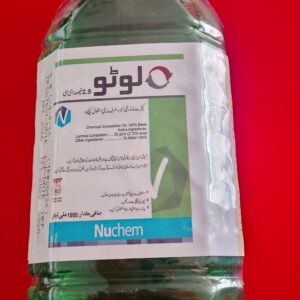
₨ 1,150Loto (2.5%EC Lambda Cyhalothrin) Nuchem
₨ 1,000₨ 1,150 -
-
₨ 1,550
₨ 1,650RIGHT WAY 15% EC (Quizalofop-P-ethyl) 500ml
₨ 1,550₨ 1,650 -
-




Reviews
There are no reviews yet.